
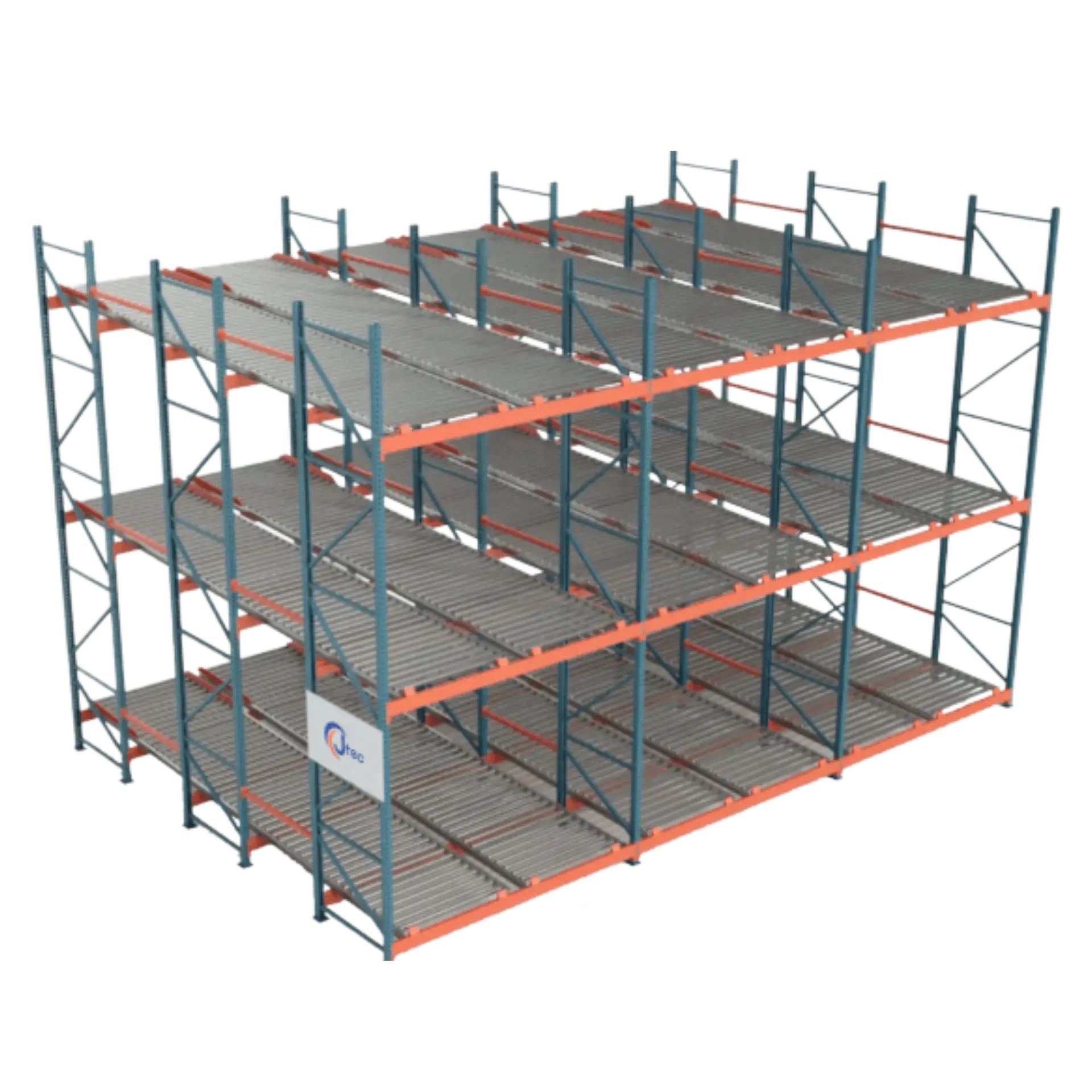
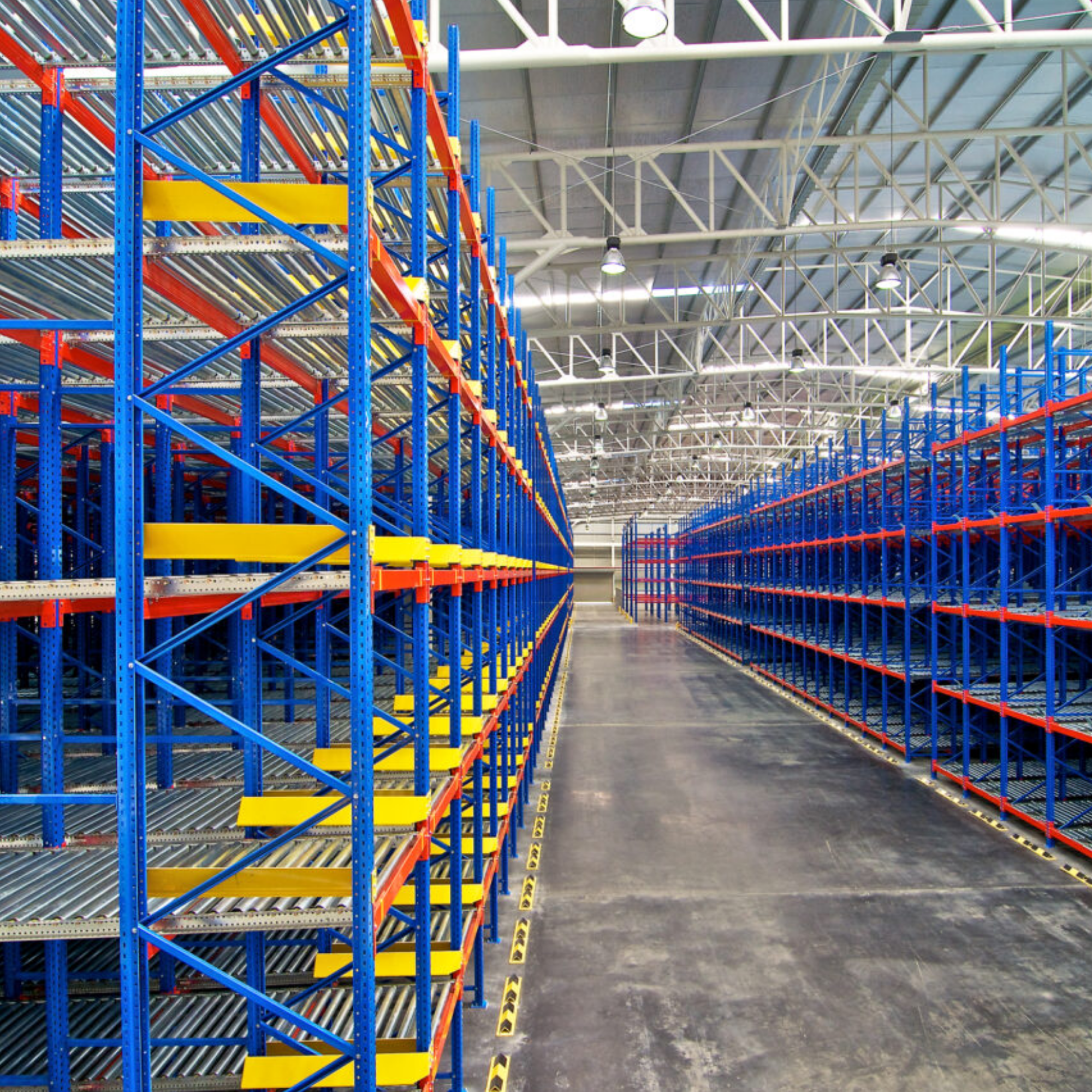
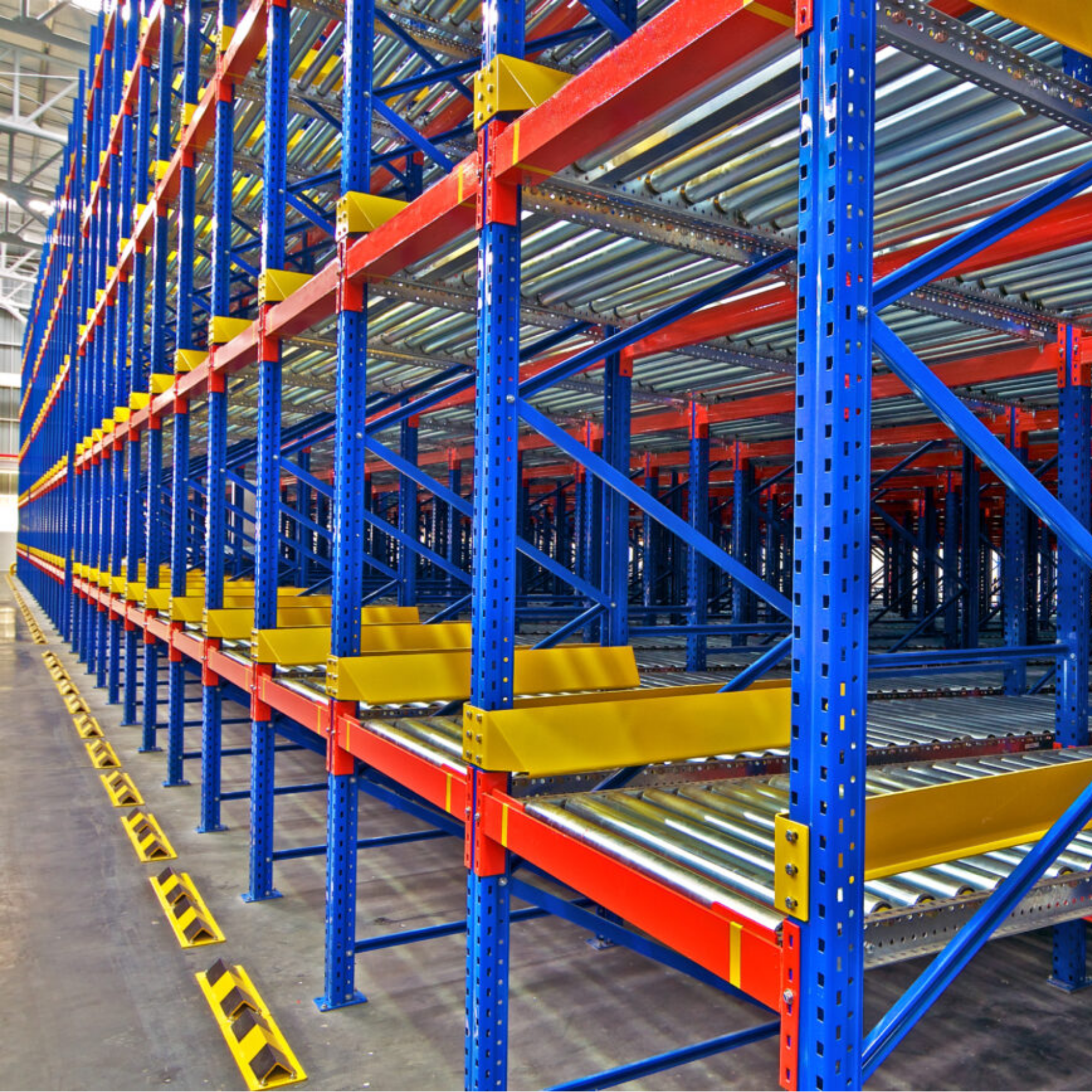
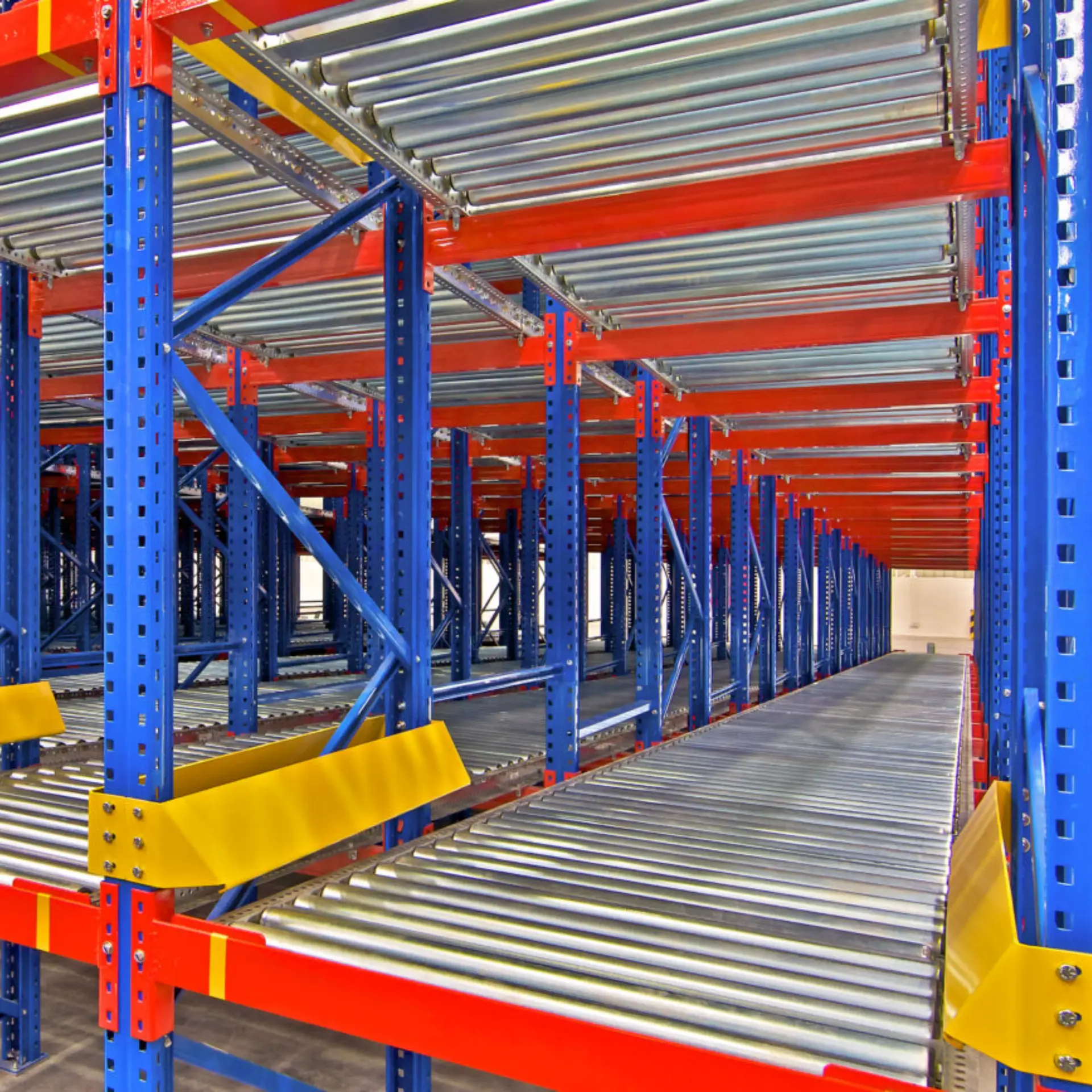
 Uses inclined rollers or wheels to move pallets from the loading end to the picking end, ensuring First-In, First-Out inventory rotation.Deep lane design increases storage capacity and reduces aisle space compared to traditional selective racking.Ideal for high-volume operations with consistent product turnover, such as food, beverage, and cold storage facilities.
Maximize throughput and maintain perfect inventory rotation with our Pallet Flow Racking systems. Utilizing gravity-driven inclined rollers, this deep-lane storage solution automatically glides pallets from the loading aisle directly to the picking face. By physically separating the loading and retrieval processes, you reduce forklift congestion and create a safer, more efficient workflow. It is the ultimate high-volume storage solution for facilities demanding rapid, reliable inventory movement.
Need More Information? Have Us Contact You
Pallet Flow Racking uses slightly inclined lanes equipped with load-bearing rollers or wheels. Pallets are loaded at the elevated end and move by gravity at a controlled rate toward the opposite picking end. This keeps the next pallet available for removal without requiring powered movement within each storage lane.
Yes. Pallets enter from the loading aisle and leave from the opposite picking aisle, creating first-in, first-out (FIFO) inventory rotation. The first pallet loaded into a lane becomes the first pallet available for retrieval. This makes the system suitable for goods with expiration dates and other high-turnover inventory requiring consistent stock rotation.
Pallet Flow Racking is well suited for high-volume, high-turnover goods, including food, beverages, frozen products, consumer goods, and other date-sensitive inventory. It can also serve as buffer storage or hold prepared orders near dispatch areas. Each lane is typically assigned to a compatible SKU and pallet profile.
The system stores pallets in deep lanes with minimal empty space between loads and fewer aisles than conventional selective pallet racking. This creates a dense volume of usable storage while maintaining separate loading and unloading access. Actual capacity depends on lane depth, rack height, pallet dimensions, load clearances, and building constraints.
No. Forklifts load pallets at one end of the lane and retrieve them from the opposite end without driving inside the rack structure. Separating loading and unloading activity can also reduce interference between inbound and outbound tasks. Operators still require adequate aisle space and must position pallets correctly on the roller lanes.
Yes. Pallet Flow Racking can be configured around required flow rates, order-picking processes, pallet dimensions, load weights, lane depths, and storage levels. Pallets must be in suitable condition to travel reliably across the rollers. The final design may also incorporate braking and control components to maintain safe pallet movement.
We use cookies to improve your experience on our site. By using our site, you consent to cookies.
Manage your cookie preferences below:
Essential cookies enable basic functions and are necessary for the proper function of the website.
These cookies are needed for adding comments on this website.
Statistics cookies collect information anonymously. This information helps us understand how visitors use our website.
Google Analytics is a powerful tool that tracks and analyzes website traffic for informed marketing decisions.
Service URL: policies.google.com (opens in a new window)
SourceBuster is used by WooCommerce for order attribution based on user source.
Marketing cookies are used to follow visitors to websites. The intention is to show ads that are relevant and engaging to the individual user.
OptinMonster is a powerful lead generation tool that helps businesses convert visitors into subscribers and customers.
Service URL: optinmonster.com (opens in a new window)
You can find more information in our Cookie Policy and .