
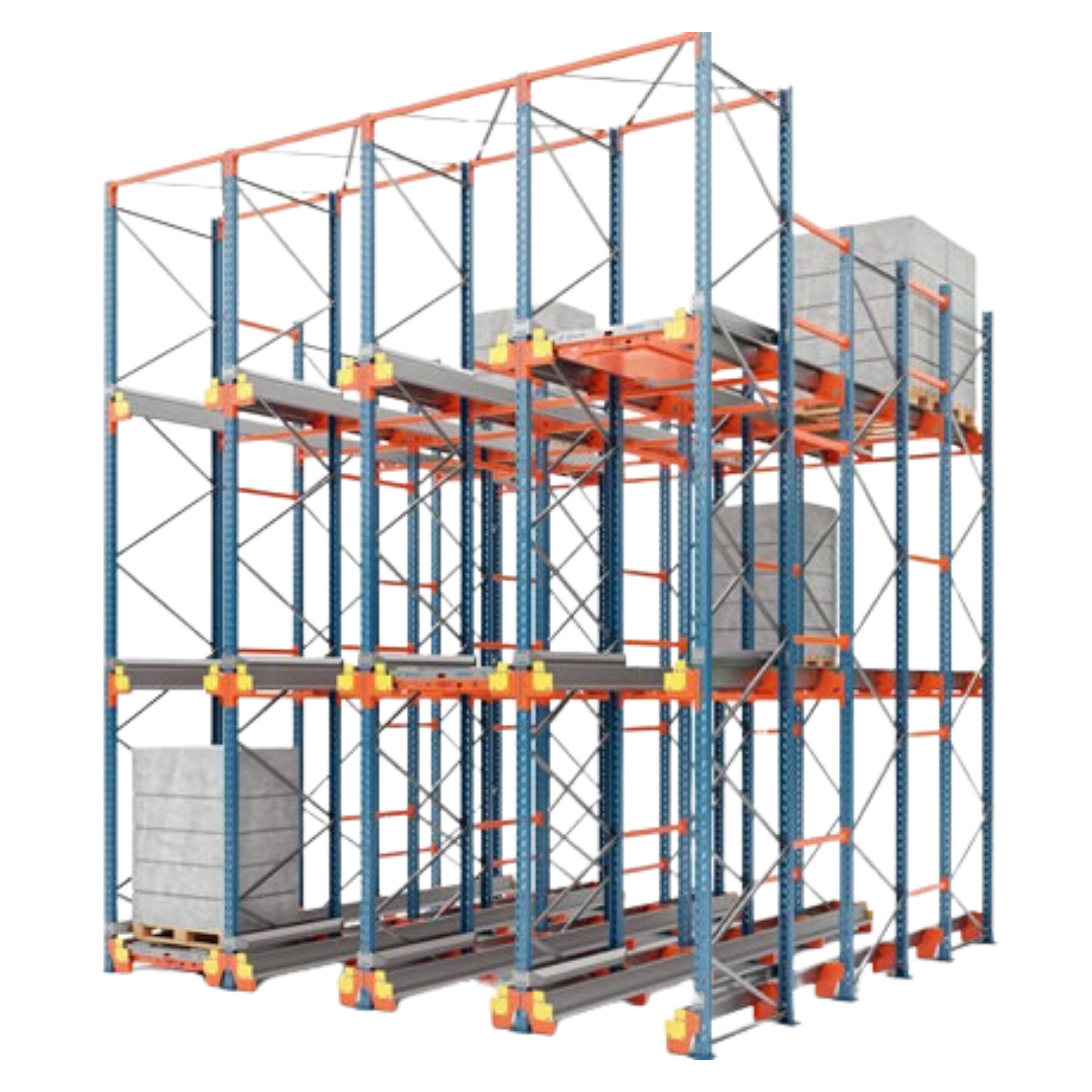
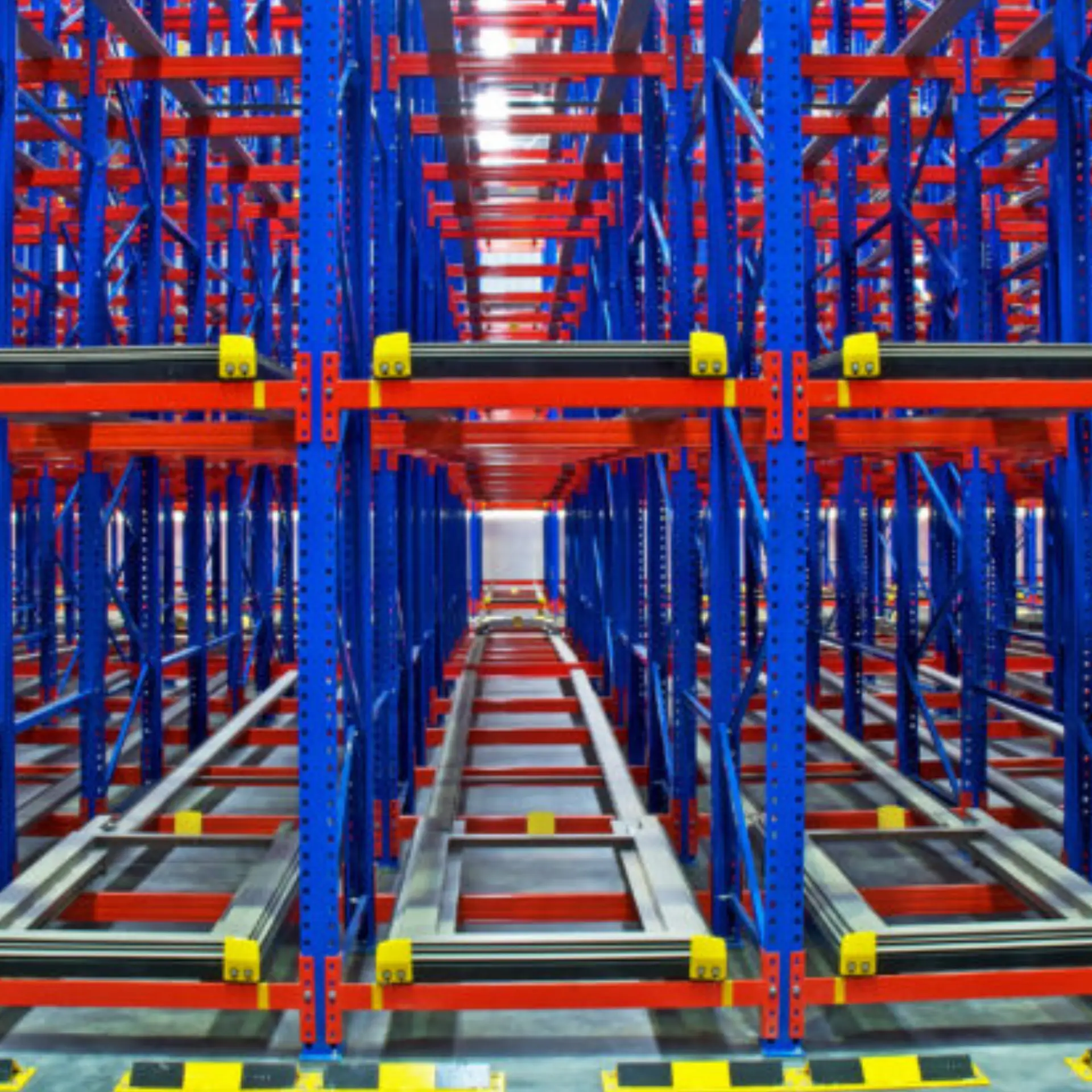
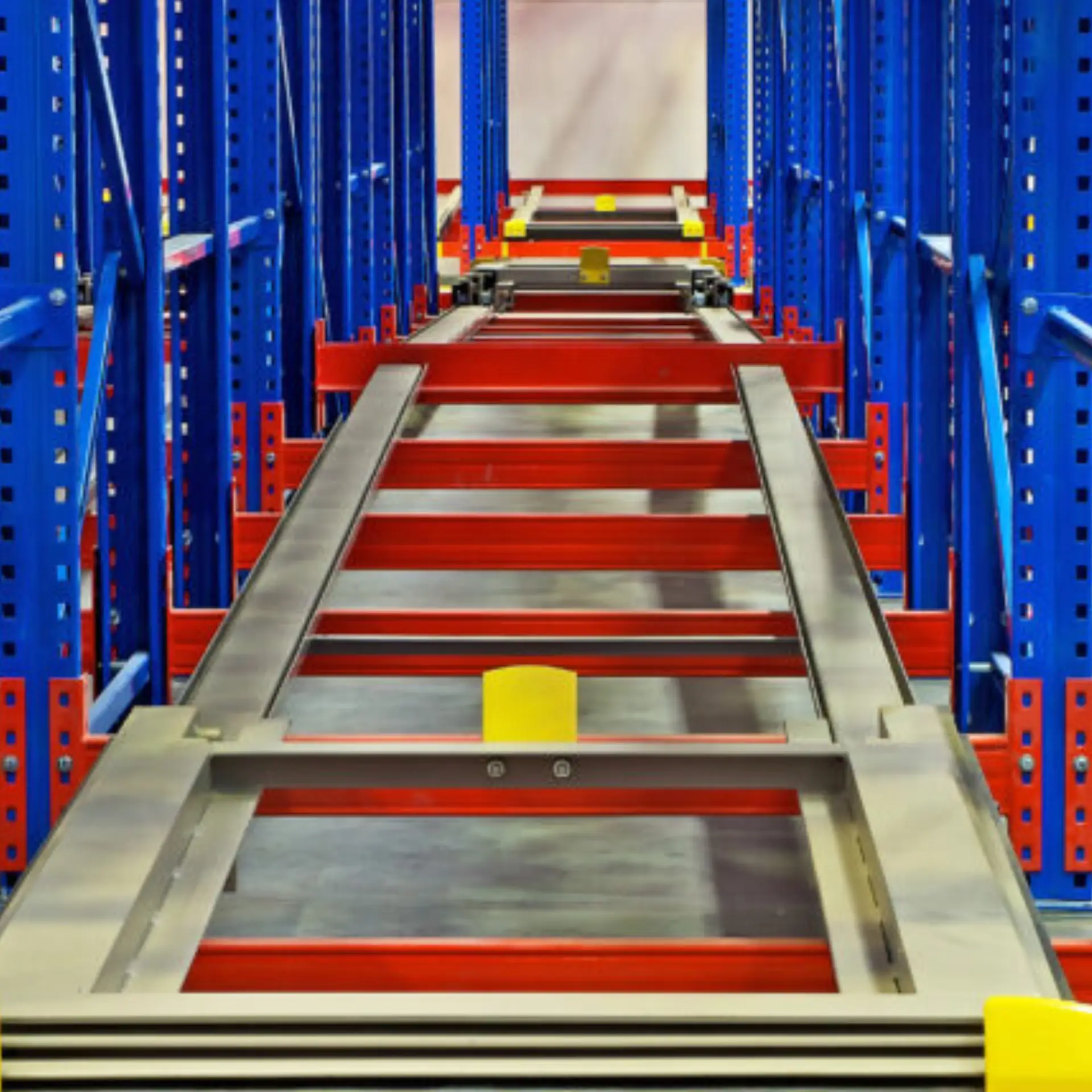

 Supports both FIFO (First-In, First-Out) and LIFO (Last-In, First-Out) inventory management.Minimizes forklift entry into racking lanes, reducing the risk of damage and improving operator safety.Commonly used in environments where space efficiency and throughput are critical.
Maximize your warehouse footprint and enhance operator safety with our advanced Push Back Racking systems. Designed for high-density storage environments where space efficiency and rapid throughput are critical, this semi-automated solution streamlines your material handling operations. By utilizing a motorized shuttle to load and unload pallets within the rack structure, the system drastically minimizes forklift entry into storage lanes. This not only protects your racking from collision damage but also directly supports our commitment to zero-accident handling.
Need More Information? Have Us Contact You
Push Back Racking stores pallets on nested carts or rollers within slightly inclined lanes. Each newly loaded pallet pushes the pallets already in the lane farther back. When the front pallet is removed, gravity moves the remaining pallets toward the aisle. Loading and unloading are completed from the same working aisle.
Push Back Racking operates according to last-in, first-out (LIFO) inventory rotation. The most recently loaded pallet becomes the first pallet available for removal. This makes the system better suited for inventory that does not require strict FIFO rotation. Each lane should hold compatible pallets assigned to the same SKU.
Cart-and-rail Push Back Racking can store between two and five pallets deep per lane. Roller configurations may support deeper lanes for certain applications. The appropriate depth depends on available building space, pallet dimensions, load weight, forklift pushing capacity, inventory turnover, and the desired balance between storage density and SKU selectivity.
Yes. Each storage lane operates independently and can be assigned to a different SKU. This allows multiple products to be stored within the same rack system while maintaining dense pallet storage. Pallets within an individual lane should remain compatible in size, weight, construction, and handling requirements to support reliable cart or roller movement.
No. The forklift loads and retrieves pallets from the aisle-facing position without entering the rack structure. Keeping handling equipment in the working aisle can shorten travel and reduce the chance of vehicle contact inside the rack. The selected forklift must still provide sufficient capacity, lift height, stability, and pushing force for the configured lane.
Yes. The rack carts are designed to operate across temperatures ranging from -22°F to 104°F, supporting use in freezer, refrigerated, and ambient warehouse environments. The final configuration should account for operating temperature, condensation, pallet condition, maintenance access, floor requirements, and the handling equipment used within the facility.
We use cookies to improve your experience on our site. By using our site, you consent to cookies.
Manage your cookie preferences below:
Essential cookies enable basic functions and are necessary for the proper function of the website.
These cookies are needed for adding comments on this website.
Statistics cookies collect information anonymously. This information helps us understand how visitors use our website.
Google Analytics is a powerful tool that tracks and analyzes website traffic for informed marketing decisions.
Service URL: policies.google.com (opens in a new window)
SourceBuster is used by WooCommerce for order attribution based on user source.
Marketing cookies are used to follow visitors to websites. The intention is to show ads that are relevant and engaging to the individual user.
OptinMonster is a powerful lead generation tool that helps businesses convert visitors into subscribers and customers.
Service URL: optinmonster.com (opens in a new window)
You can find more information in our Cookie Policy and .