
Why End-of-Line Packaging Is Becoming a Priority
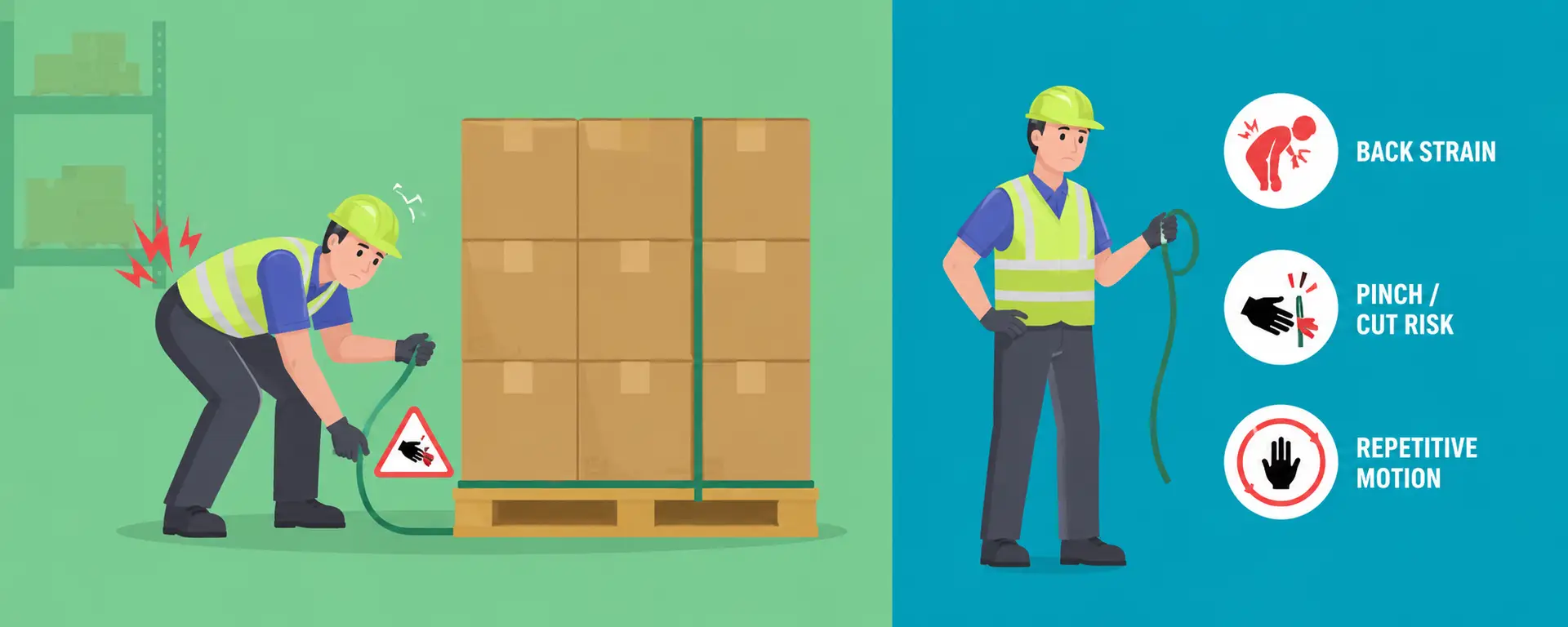
Strains from manual banding and stretch wrapping remains the #1 cause of soft tissue recordable incidents in warehousing and logistics operations. According to OSHA data, a single musculoskeletal injury can cost a company between $30,000 and $65,000 in direct medical costs, workers’ compensation, and lost productivity.
OSHA specifically recommends automatic wrapping equipment as an engineering control to reduce bending during the process.
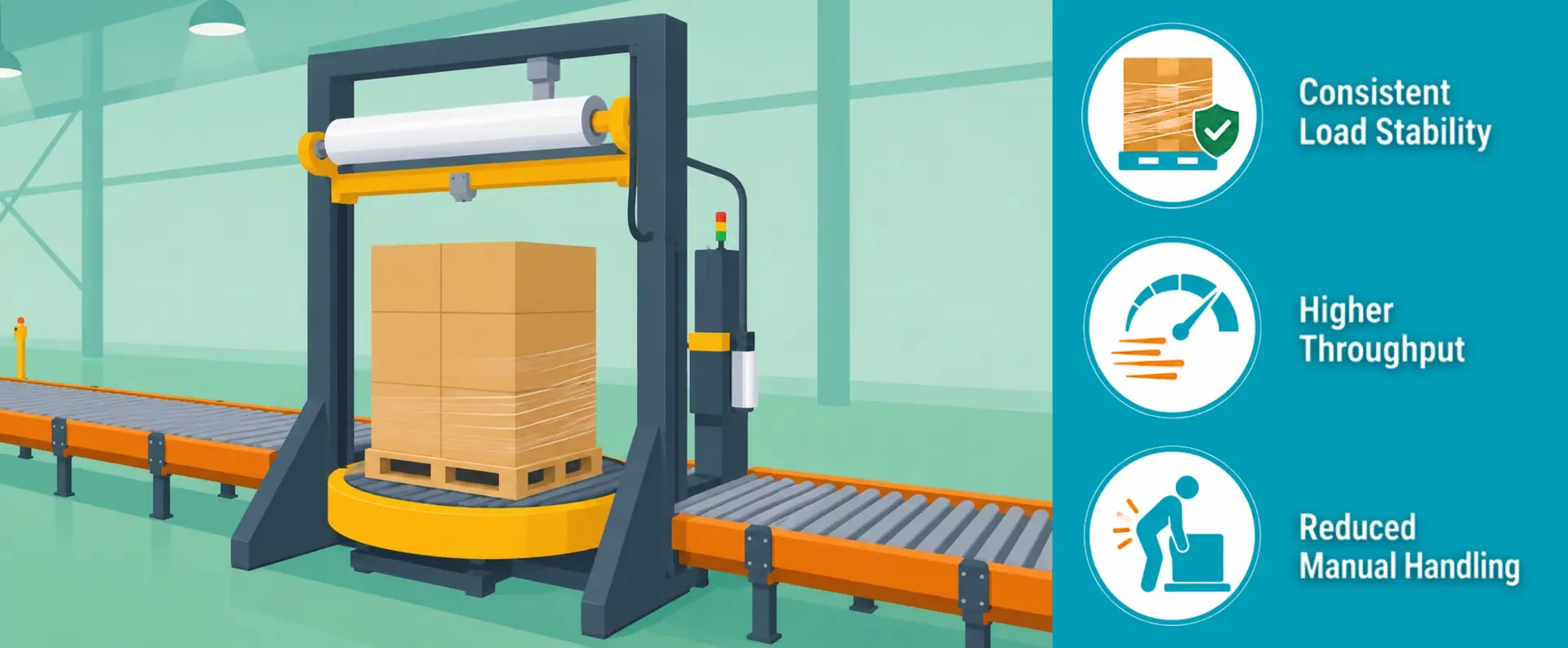
Another immediate benefit is labor optimization. Rather than assigning employees to repeatedly feed straps, walk around pallets with stretch film, cut material, or secure finished loads by hand, automated equipment performs those repetitive steps consistently from cycle to cycle. This allows employees to focus on higher-value work while helping facilities maintain throughput during periods of limited labor availability.
Automated banding and wrapping provides a significant ergonomic and safety opportunity. Liberty Mutual’s 2025 Workplace Safety Index identifies overexertion involving outside sources—much of it associated with manual material handling—as the leading cause of serious workplace-injury costs.
Creating a Continuous Flow
Automatic banding and stretch-wrapping systems are becoming increasingly important in manufacturing, warehousing, and distribution environments. As operations expand and manufacturers face continued pressure to increase output with available labor, automated packaging equipment offers a way to improve speed, repeatability, load security, and workforce safety simultaneously.
Market research points to increasing adoption of fully autonomous systems as companies seek higher packaging speeds, less manual intervention, and more consistent load containment.
The shift is about more than simply replacing a manual task with a machine. It is part of a broader movement toward creating a continuous automated material flow. At Jtec Equipment, we offer everything you need way to automate your material transport, from receiving to banding and shipping, with our automated powered rollers. Combined with our autonomous banders and wrappers, you can make your facility safer and more efficient than ever before.
Proven Solutions to Consider:
Automated Vertical Bander
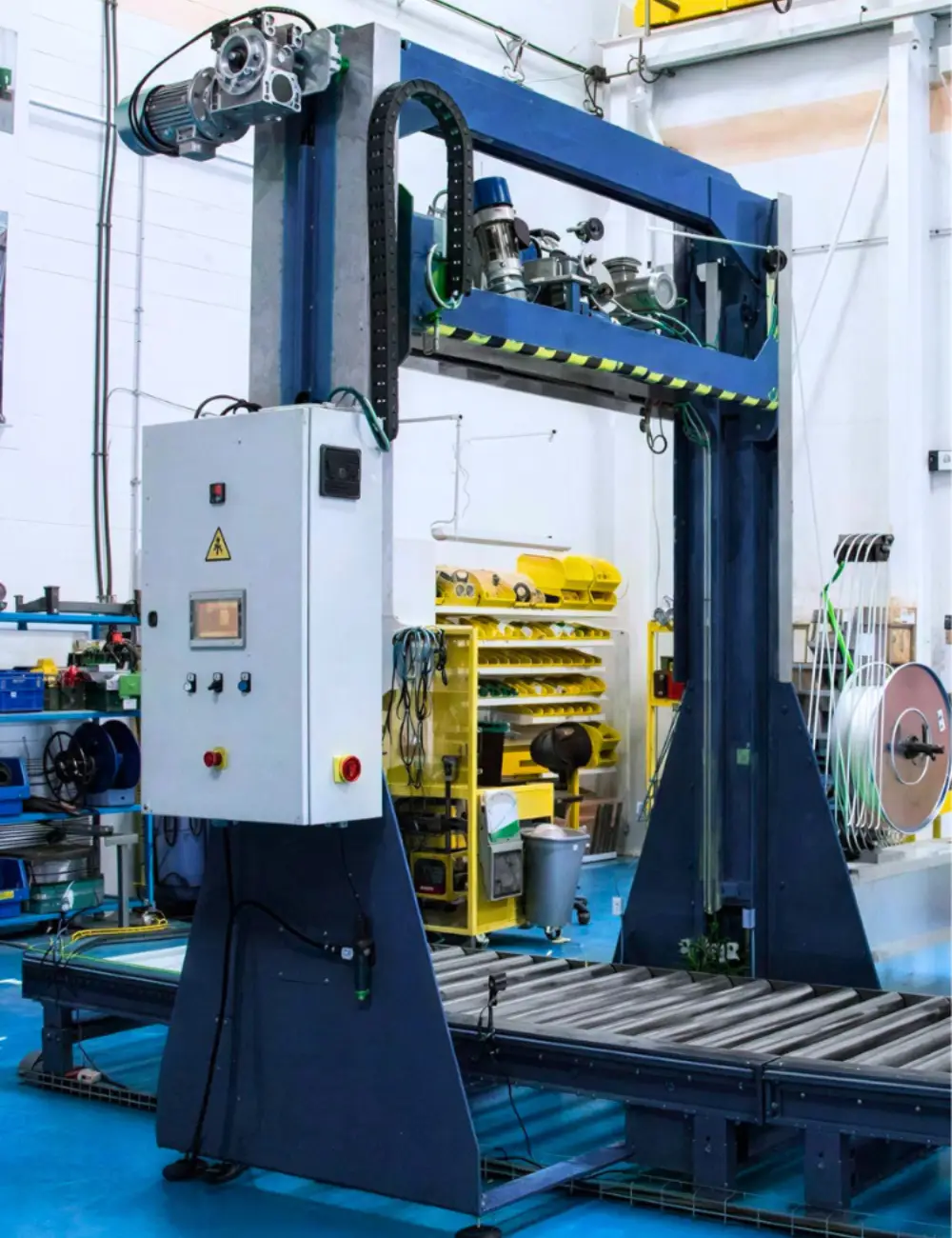
Secure the product directly to the pallet: The vertical bander is specifically designed to prevent the load from moving away from the pallet during transportation and storage, providing strong load-to-pallet stability.
High-tension automatic strapping: It offers approximately 60–70 pallets per hour, with maximum tension of 4,000 N using PP strap and 5,000 N using PET strap. The load moves through the machine on a powered conveyor while the arch adjusts, tensions, cuts, and heat-welds the strap.
The strap travels vertically over the product and secures it to the pallet, rather than simply reinforcing the sides of the load. This makes it well suited for manufacturing, food and beverage, pharmaceutical, and construction loads where preventing separation from the pallet is critical.
Automated Stretch Wrapper
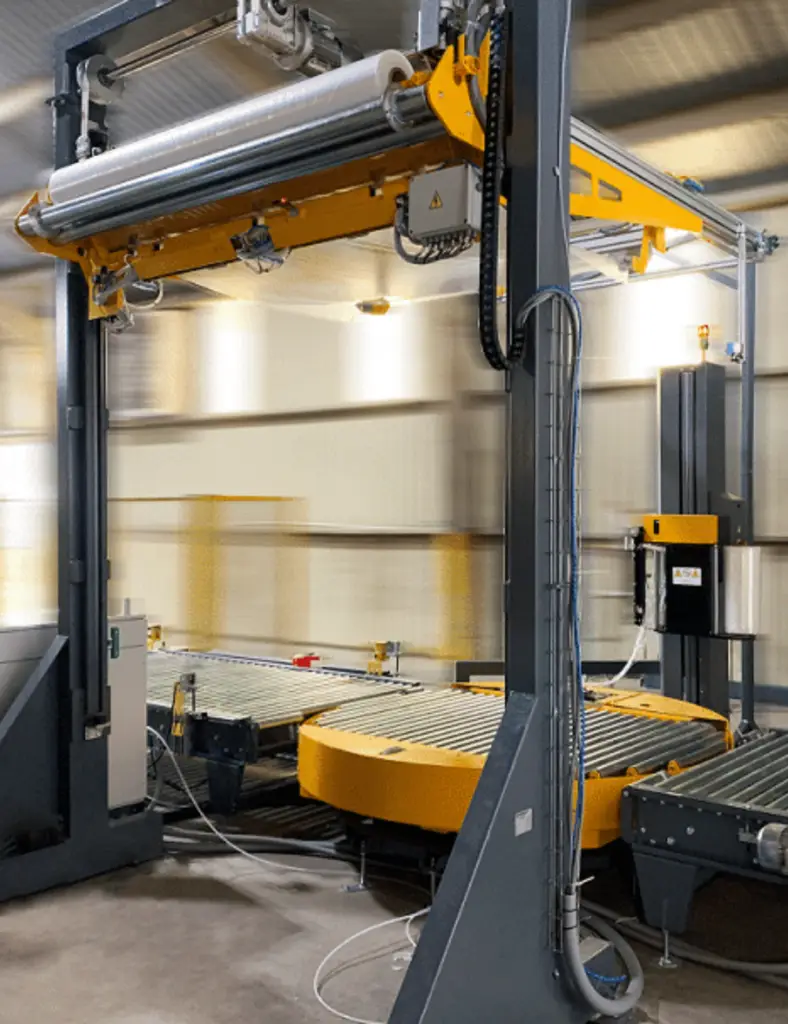
Get fast, automated load containment: This stretch wrapper can wrap approximately 40 pallets per hour and automatically attaches, cuts, and heat-seals the stretch film, reducing manual operator involvement.
Efficient film usage and programmable wrapping: It uses a 250% powered pre-stretch carriage and allows customers to save 10 wrap programs, with adjustable rotation speed, carriage speed, film tension, and top/bottom wraps.
This machine wraps the entire pallet load with stretch film rather than applying straps. It is best for stabilizing, containing, and protecting palletized products during storage and transportation, especially in high-volume automated packaging lines.
Automated Horizontal Bander
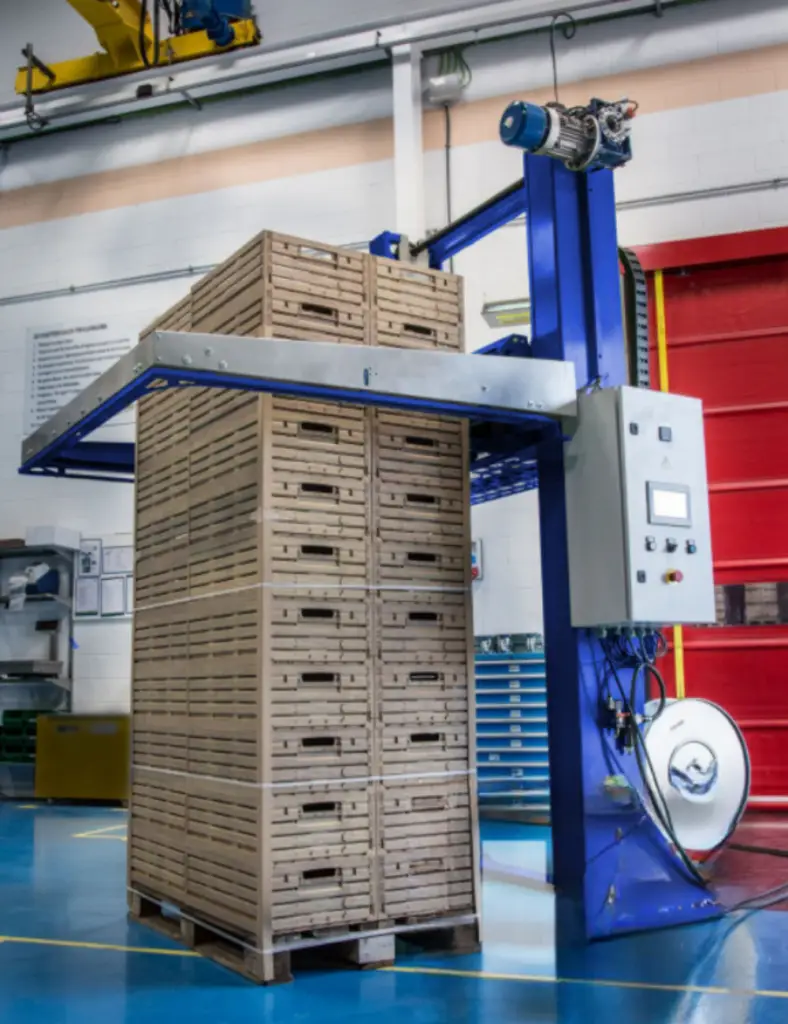
Add strong horizontal reinforcement: The horizontal bander applies straps around the sides of the load at selected heights, making it especially useful for loads that need additional lateral support, such as construction materials, furniture, fruits and vegetables, and barrels.
Self-adjusting and high-output operation: Its dynamic arch automatically adjusts to the size of the load, tensions the strap, cuts it, and heat-welds it. Productivity is rated at approximately 90 pallets/hour with two straps or 80 pallets/hour with five straps.
Unlike the stretch wrapper or vertical strapper, this machine provides horizontal compression and reinforcement around the load itself. It is ideal for tall, stacked, loose, or shifting products that need support at several levels. It can also operate independently or be integrated into an automatic line.
Powered Roller Conveyors
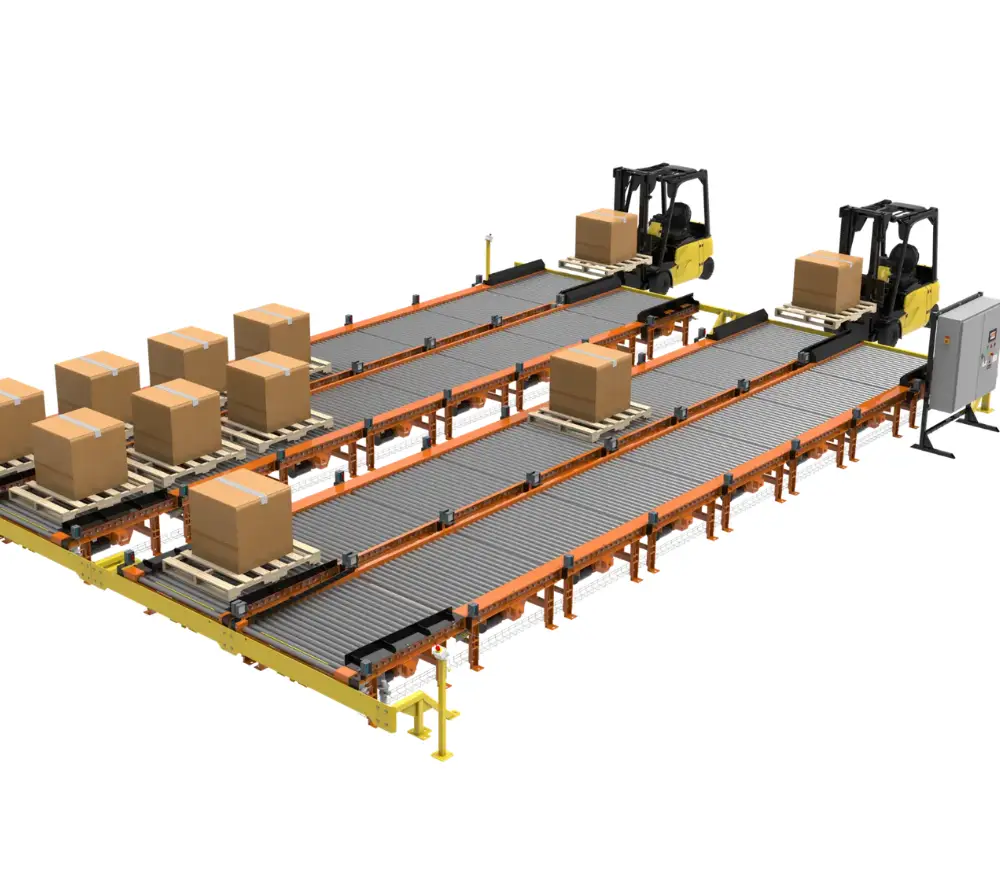
To bring it all together into one complete system, we manufacture powered roller conveyors. The conveyors become the backbone of the system, automatically moving pallets from one process to the next while sensors track load position and the centralized controls coordinate each machine. A pallet can be wrapped for overall containment, horizontally strapped for additional load stability, and vertically strapped to secure the product to the pallet—all without relying on an operator or forklift to move the load between stations.
In Conclusion
By bringing powered roller conveyors, centralized controls, stretch wrapping, and horizontal and vertical strapping together into one coordinated system, Jtec can help customers create a more efficient and consistent end-of-line process with less manual handling and greater control over product flow.
To learn more, browse our other end-of-line products here.
If you’re looking to automate your pallet handling and load containment process, contact us here to discuss how we can design an integrated system built around your operation.