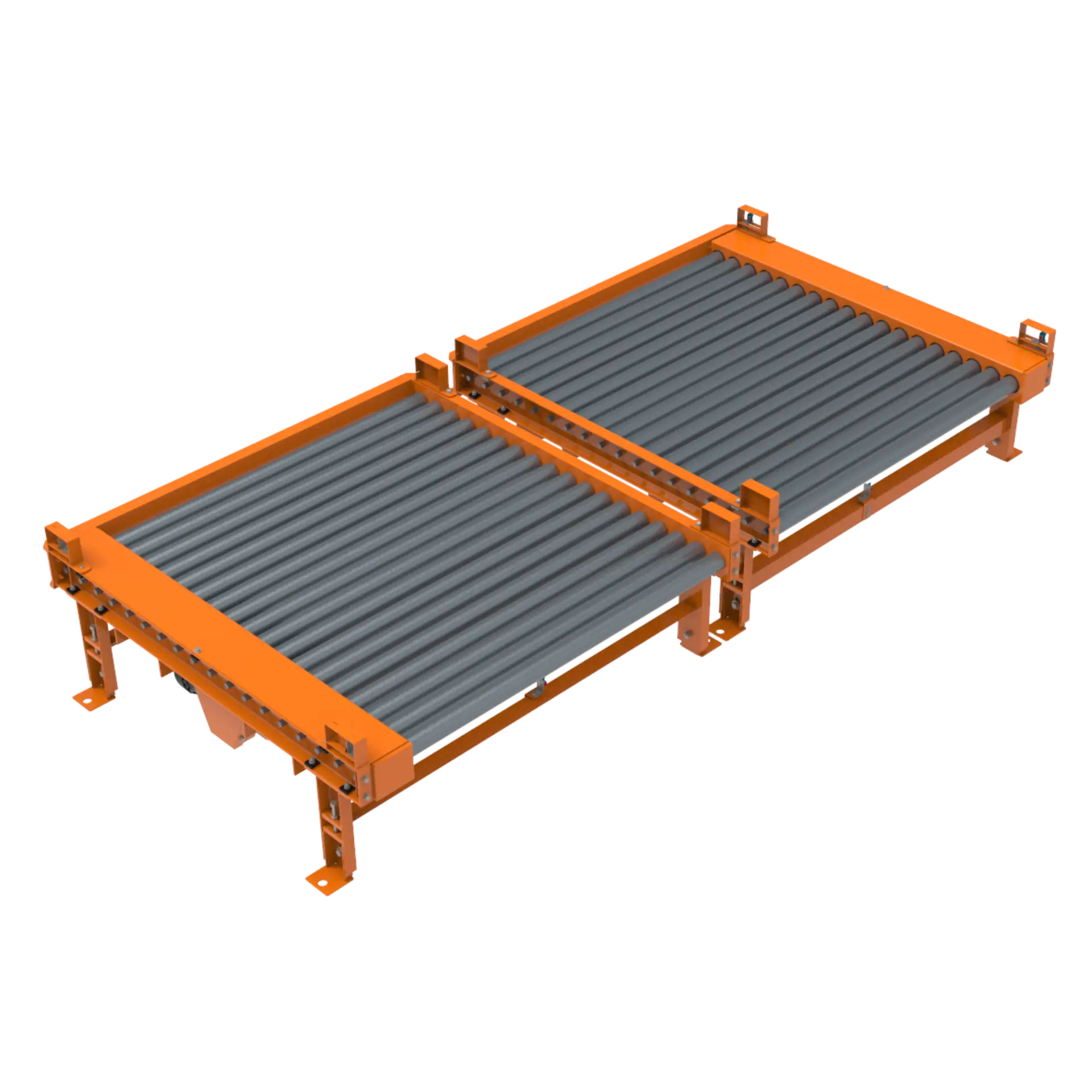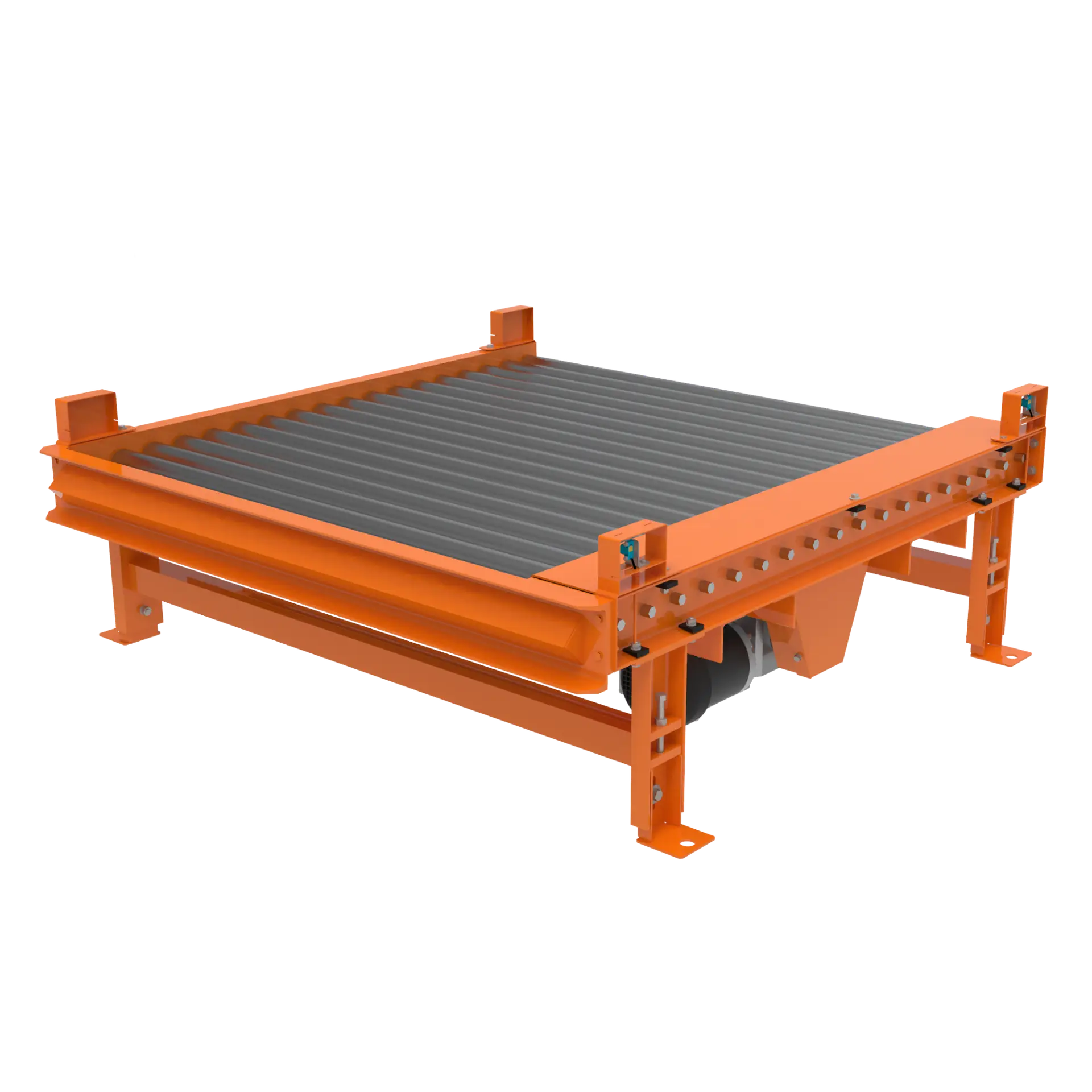
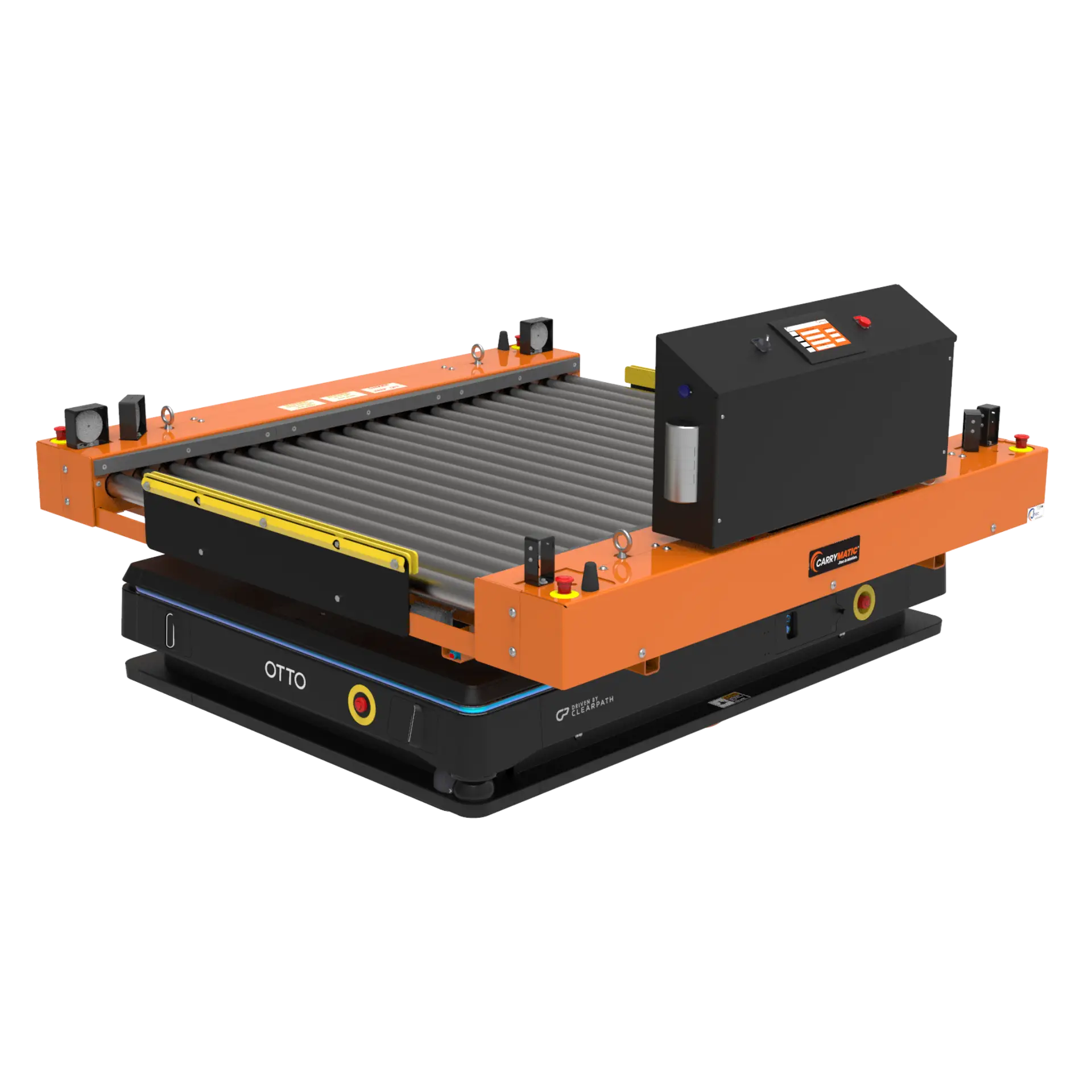
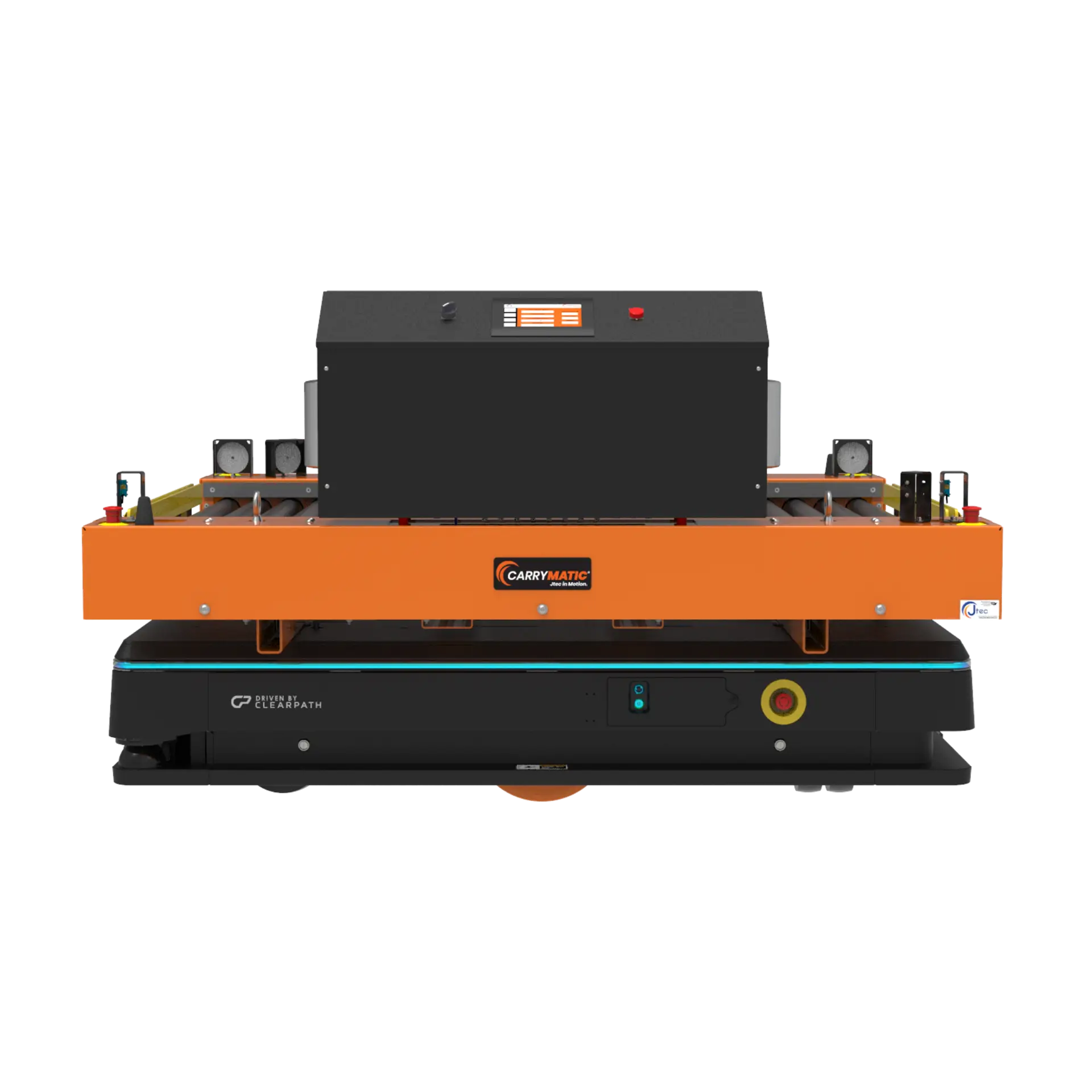
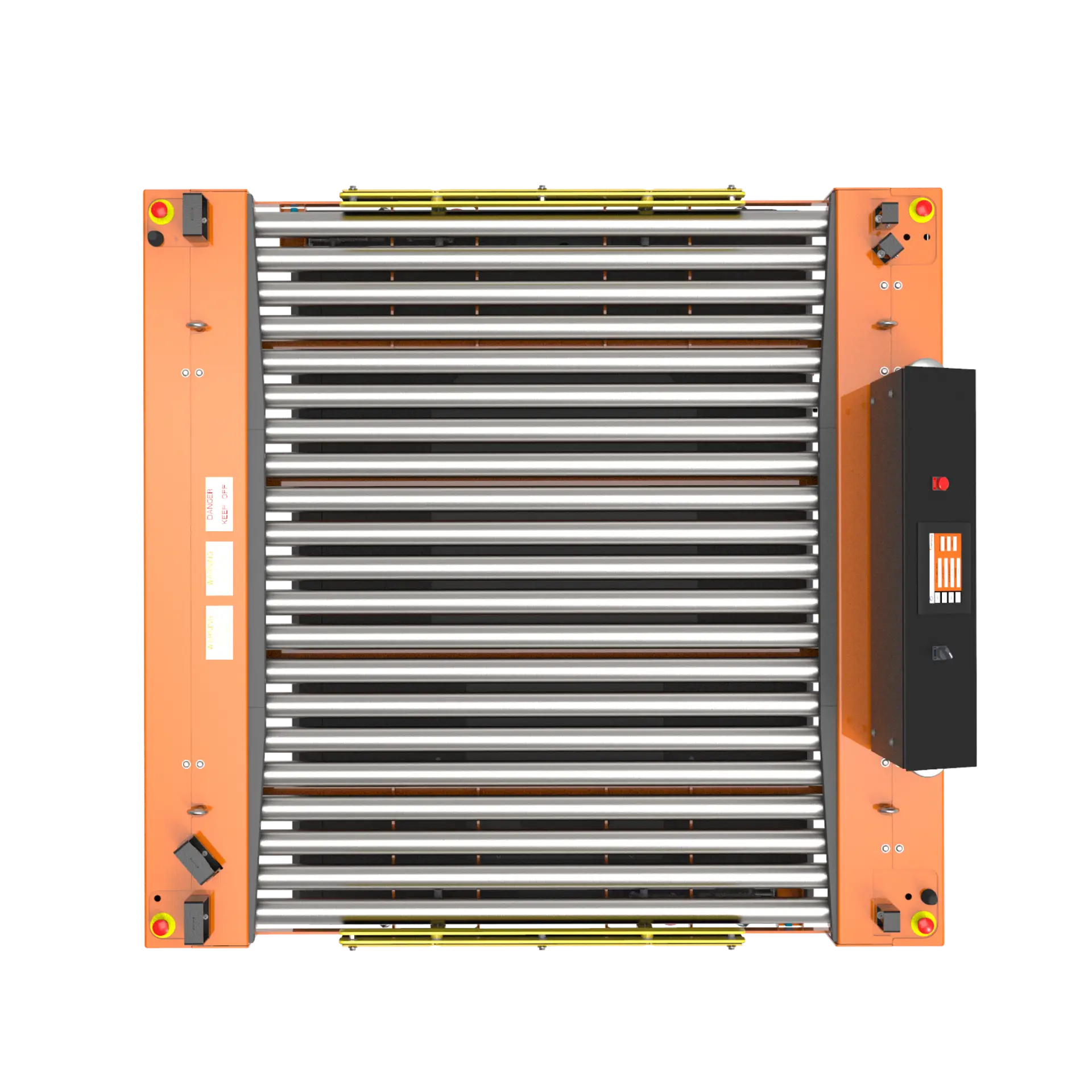
 Front Or Side Load OptionsUp to 3,300 lbs weight capacity7″ Touchscreen HMI ControlsSafety Gates Optional
The Powered Roller AMR Attachment – Single Bay – AMRA-PR-25 (Autonomous Mobile Robot Attachment, Powered Roller) is driven by 24V MDR rollers controlled via Modbus signals from the AMR. The effective width and length of the roller beds can be customized to fit your individual load size requirements. Attachment can be designed to load/unload from either side of the AMR.
Powered gates are standard features in all load/unload directions. This unit is also available in a dual bay configuration that can be either a side load/unload or a front and rear load/unload. Units can be integrated with current or new line-side equipment.
The CarryMatic system increases safety, productivity, and reduces cost. For more information, fill out the form to be contacted by a CarryMatic system expert.
Need More Information? Have Us Contact You
The attachment enables an autonomous mobile robot to transport and automatically transfer one pallet or material load at a time. Its powered roller deck interfaces with compatible conveyors and transfer stations, allowing materials to move between processes without manual pushing, lifting, or forklift handling during each transfer.
The Powered Roller AMR Attachment – Single Bay has a listed capacity of up to 3,300 pounds. The load, attachment, and selected autonomous mobile robot must be evaluated together because total weight, load distribution, center of gravity, and AMR capacity all affect system fit and performance.
Motor-driven rollers move the load onto or off the attachment when the AMR is correctly positioned at a compatible station. The attachment and connected equipment coordinate the transfer through the automation controls. This creates a hands-free exchange between production, packaging, storage, and other material-handling processes.
The single-bay configuration provides a smaller footprint for applications where aisle space, maneuverability, or access to transfer points is limited. It carries one load at a time, while a dual-bay attachment is intended to transport two loads. The appropriate configuration depends on payload size, delivery frequency, route layout, and required throughput.
Yes. Jtec can configure the powered roller attachment to interface with current or new line-side equipment, including compatible powered conveyor and transfer stations. Integration requires matching the load dimensions, roller direction, transfer height, controls, and station arrangement so materials move safely and consistently between each component.
The roller deck can be sized around the footprint and handling requirements of the intended load. Important design inputs include the load’s dimensions, weight, bottom surface, orientation, center of gravity, and required transfer direction. Jtec uses this information to determine the appropriate attachment and station configuration for the application.
We use cookies to improve your experience on our site. By using our site, you consent to cookies.
Manage your cookie preferences below:
Essential cookies enable basic functions and are necessary for the proper function of the website.
These cookies are needed for adding comments on this website.
Statistics cookies collect information anonymously. This information helps us understand how visitors use our website.
Google Analytics is a powerful tool that tracks and analyzes website traffic for informed marketing decisions.
Service URL: policies.google.com (opens in a new window)
SourceBuster is used by WooCommerce for order attribution based on user source.
Marketing cookies are used to follow visitors to websites. The intention is to show ads that are relevant and engaging to the individual user.
OptinMonster is a powerful lead generation tool that helps businesses convert visitors into subscribers and customers.
Service URL: optinmonster.com (opens in a new window)
You can find more information in our Cookie Policy and .